 ACESSIBILIDADE
 LIBRAS






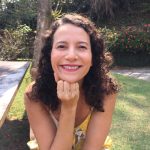
Patricia Bastos de Azevedo
Permanente
Permanent Faculty Member
Lattes: http://lattes.cnpq.br/2172195421648211
Worker and Mother, holding a degree in Pedagogy (1995), a degree in History (1998), and a Master’s in Education from Fluminense Federal University (2003), and a Doctorate in Education from the Federal University of Rio de Janeiro (2011). She is currently an Associate Professor at the Federal Rural University of Rio de Janeiro. She has experience in the field of Education, with an emphasis on Education and History, working primarily on the following topics: history teaching, literacy, literacy practices, and education for young people and adults.
CONTACT INFORMATION
E-mail: patriciabazev@ufrrj.br
RESEARCH LINE
- Line 1: Contemporary Studies and Educational Practices.
RESEARCH GROUP
- Curriculum, Culture, and Politics.
Coordinators: Patricia Bastos de Azevedo and Rafael dos Santos Lazaro.
The research group investigates Teacher Training in dialogue with the fields of Memory and Language, aiming to understand the power relations that constitute this formative/work process. To conduct this trajectory, we conceptually mobilize authors who support this tripod: 1. Memory – Pollak (1989, 1990), Ricouer (2010, 2017), Halbwachs (1990); 2. Teacher Training – Novoá (1992, 1997, 2009, 2010), Tardif (2007, 2008); 3. Language – Bakhtin (1998, 2002, 2003, 2006), Freire (1968, 1996, 1985, 1987, 1992). Methodologically, we use tools that allow us to deepen the evidence constructed in the research field, utilizing the Paradigm of Evidence (GINZBURG, 1998), along with the Biographical Workshop (DELORY-MOMBERGER, 2006, 2016) and the Escrevivência of Conceição Evaristo. In contemporary times, investigating Teacher Training is not only a fundamental issue but also a political act. Research developed by Undergraduate, Master’s, and Doctoral students, as well as collaborating professors, is part of the constitution of this group, having further developments and investigative spaces that complement and expand the theoretical, methodological, and research fields.
RESEARCH PROJECTS
- WOMEN-RESEARCHERS-TEACHERS: Who are and what do the historians of the permanent staff of the Professional Master’s in History Teaching (ProfHistória) research?
Period: (2020 – Present)
This research is anchored in a larger investigation that seeks to explore Teacher Training in dialogue with the fields of Memory and Language, aiming to understand the power relations that constitute this labor/formative process – Teacher Training, memory, and Language: correlations of power and force in contemporary times. To carry out this trajectory, we conceptually mobilize authors who support this tripod: 1. Memory – Pollak (1989, 1990) and Ricouer (1994, 2007); 2. Teacher Training – Novoá (1992, 1997, 2009, 2010), Tardif (2007, 2008); 3. Language – Bakhtin (1998, 2002, 2003, 2006), Freire (1968, 1996, 1985, 1987, 1992), Graff (1990, 1992), Street (2006, 2010, 2014). Methodologically, we use tools that allow us to deepen the evidence constructed in the research field, utilizing the Paradigm of Evidence (GINZBURG, 1998) and Oral History (ALBERTI, 2004; FERREIRA, 2002). In contemporary times, investigating Teacher Training is not only a fundamental issue but also a political act. For the 2020 and 2021 period, we focus on the role and position of women historians in teacher training. Our research field will consist of women-teacher-researchers working in the permanent staff of the Professional Master’s in History Teaching (ProfHistória). In this phase of the research, a professional survey and bibliographic production will be conducted, aiming to understand the processes of written production. We believe that the writing of history is a literacy practice (AZEVEDO, 2011, 2015), embedded in a literate culture shaped by correlations of power and force. As a correlation of power, gender plays a fundamental role in written constructions, and Brazilian academia is deeply marked by structural patriarchy and cognitive bias (SANTOS, 2019). Our research seeks to understand the complex environment in which these women-researcher-teachers construct their research, write, and disseminate their work. We believe that unveiling the literacy practices produced by these women is crucial, as the present time shapes the university and challenges us to think, do, and build the future. We aim for narrating themselves (BUTLER, 2017) and the literacy practices that constitute these women-researcher-teachers to help us understand the literate culture that shapes the writing of history in Brazil, and consequently its impact on the continuous professional development of teachers linked to ProfHistória.
 patriciabazev@ufrrj.br
 http://lattes.cnpq.br/2172195421648211