 ACESSIBILIDADE
 LIBRAS






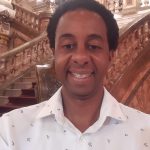
Clézio dos Santos
Permanente
Permanent Faculty Member
Lattes: http://lattes.cnpq.br/3525247325350570
Associate Professor II of Geography Education in the Department of Education and Society (DES) at the Multidisciplinary Institute (IM) of the Federal Rural University of Rio de Janeiro (UFRRJ). A “Young Scientist of Our State” from FAPERJ, with a postdoctoral degree in Geography from the University of Buenos Aires (UBA). He is a Permanent Professor in the Graduate Program in Education, Contemporary Contexts, and Popular Demands (PPGEduc) at UFRRJ, supervising research in Line 1: Contemporary Studies and Educational Practices, and in the Dinter program with IF Goiano. He is also a Permanent Professor in the Graduate Program in Geography (PPGGEO) at UFRRJ, supervising research in Line 2: Territory, Environment, and Geography Education. Coordinator of the PIBID Pedagogy Subproject IM/UFRRJ (2020–2022; 2022–2024). He also teaches in the Distance Pedagogy Bachelor’s Program at UNIRIO/CEDERJ. Researcher and Deputy Coordinator of the Multidisciplinary Laboratory for Teaching, Research, and Extension (LAMEPE/IM/UFRRJ). Leader of the Research Group on Geography Education (GEPEG/UFRRJ/CNPq). Researcher in the Integrated Environment Studies Group: Geography and Education (GEIA/UFRRJ). Researcher in the School Cartography Research Group (UNESP/Ourinhos). He has expertise in Geography and Pedagogy, emphasizing Geography Education and Teaching Practices, focusing on topics such as didactics, teacher training, education, and environmental perception.
CONTACT INFORMATION
E-mail: cleziogeo@yahoo.com.br
RESEARCH LINE
- Line 1: Contemporary Studies and Educational Practices.
RESEARCH GROUP
- Research Group on Geography Education – GEPEG
Coordinators: Clézio dos Santos and Edileuza Dias de Queiroz
The group conducts research supported by FAPERJ, CNPq, PROPPG/UFRRJ, and CAPES. It has presented its work at national events such as the National Geographers’ Congress (CBG), the National Meeting of Geographers (ENG), the National Meeting of Licensure (ENALIC), the National Meeting of Geography Teaching Practices (ENPEG), the AGB National Meeting of Geography Teachers, the Cartography for Schools Colloquium, and the National ANPEGE Meeting. Regionally, it participates in academic Geography Weeks at UFRRJ, UERJ, UFRJ, and UFF, as well as the Annual IC Meeting and Geography Graduate Symposium at UFRRJ. Internationally, the group has attended Ibero-American Geography Congresses (Portugal, Spain), Latin American Geographers’ Meetings (Cuba, Bolivia, Ecuador), and Geography and Education seminars in Argentina (UBA, UNC, UNLP, ISPJVG). Its research outputs include books, book chapters, articles in scientific journals, and conference proceedings.
YouTube: https://www.youtube.com/@grupodeestudosepesquisasem8377
RESEARCH PROJECTS
- Spatial Thinking and Innovative Teaching Practices in Public Schools: An Analysis Based on (Geo)Graphs from Baixada Fluminense
Period: (2020 – Present)
Schools are places to learn what is often difficult to acquire elsewhere. From this perspective, systematic work based on (geo)graphs and spatial thinking within formal education—despite the advent of the National Common Core Curriculum (BNCC) for elementary education and Geography’s proposed framework within it—requires further incorporation into undergraduate programs. Curricula must be modernized to prepare teachers to engage with diverse (geo)graphs and spatial thinking relevant for students’ professional, academic, and societal lives post-secondary education. The research aims to analyze and reflect on how spatial thinking can underpin geography teaching in Baixada Fluminense using innovative teaching practices. A qualitative methodology guides the research, employing concepts from Lee (2012), Gersmehl (2014), and Duarte (2016, 2017) for spatial thinking; Carbonell (2002), Cunha (2009), Gatti (2006), Masetto (2012) for innovation and teaching practice; and Cavalcanti (2005), Ponstuschka, Paganelli, and Cacete (2007) for geography teacher training. The project includes workshops for pre-service and in-service geography teacher training in Baixada Fluminense, held at the Multidisciplinary Teaching Laboratory (IM/UFRRJ) and public schools. A repository for geography teaching resources will be developed, connecting spatial thinking with educational innovation. Main Objective:
Analyze how spatial thinking can underpin geography teaching in Baixada Fluminense using innovative teaching practices. Specific Objectives: Analyze the educational landscape of geography teaching in Baixada Fluminense in light of BNCC implementation. Identify and reflect on innovative teaching practices among geography teachers in Baixada Fluminense. Discuss and apply spatial thinking in physical geography education for basic education. Discuss and apply spatial thinking in school cartography education for elementary schools. Conduct fieldwork in Geography Education Laboratories at public universities nationwide and within Rio de Janeiro.
Research Group: Research Group on Geography Education (GEPEG)
Funding: FAPERJ
Keywords: geography teaching; spatial thinking; teacher training; Baixada Fluminense
- Educational Resources in Geography and Pedagogical Innovation in Teacher Training
Period: (2021 – Present)
Integrating pedagogical innovation with educational resources in geography and environmental education is a challenge for educational training processes amidst contemporary national curriculum policy implementations. Pedagogical innovation, linked to teachers’ practices, is understood as a paradigmatic shift (Boaventura Santos, 1979; Santos, 2021), enabling reconfiguration of knowledge to bridge the gap between modern science and common sense, subjectivity, and cognition. This project aims to analyze educational resources in geography and pedagogical innovation in teacher training. A qualitative methodology underpins the study, focusing on innovation, teaching practices, and educational resource development. The project operates at the Multidisciplinary Teaching, Research, and Extension Laboratory (IM/UFRRJ), public schools in Baixada Fluminense, and among geography and pedagogy undergraduates at IM/UFRRJ. Main Objective: Analyze educational resources in geography and pedagogical innovation in teacher training. Specific Objectives: Examine the educational landscape in different school networks amidst national policy implementations. Identify and reflect on innovative teaching practices among basic education teachers. Discuss and implement meaningful learning in student and teacher education in Brazil.
Research Group: Research Group on Geography Education (GEPEG)
Funding: CNPq and FAPERJ
Keywords: teacher training; geography teaching; environmental education; teaching innovation; public school
- Geography Teaching and Teacher Training in Latin America Amid Educational Policies
Period: (2019 – Present)
The transition in contemporary social thought in Latin America is shaped by rapid social, economic, political, and technological changes, presenting challenges for education and geography teaching aimed at fostering responsible, reflective, and engaged citizens. Since the 1990s, numerous curricular reforms have been implemented in “developing” countries for basic education. This research seeks to analyze and reflect on Geography Teaching and Teacher Training in Latin America amidst contemporary educational policies using qualitative research methods, focusing on Latin American authors, official documents, and interviews with geography teachers and researchers. Main Objective: Analyze how Geography Teaching and Teacher Training have been conducted in Latin America amidst contemporary educational policies. Specific Objectives: Examine the educational landscape in Latin America and the Caribbean amidst public policy implementation. Identify and reflect on teaching practices among basic education teachers in Latin America and the Caribbean. Discuss meaningful learning in teacher and student education in Latin America and the Caribbean. Organize a network of experiences on geography teaching and teacher training in Latin America and the Caribbean.
Research Group: Research Group on Geography Education (GEPEG)
Funding: CNPq
Keywords: teacher training; geography teaching; Latin America; educational policies; didactics
 cleziogeo@yahoo.com.br
 http://lattes.cnpq.br/3525247325350570