 ACESSIBILIDADE
 LIBRAS







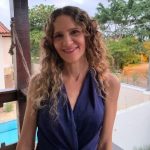
Andressa Santos Rebelo
2021 – 2022
Institution: Federal University of Mato Grosso do Sul – UFMS
She holds a degree in Mathematics (Teaching), a master’s degree in Education, and a Ph.D. in Education from the Federal University of Mato Grosso do Sul. She completed a postdoctoral fellowship at the Federal University of Grande Dourados and the Federal Rural University of Rio de Janeiro. She is an associate editor of the Brazilian Journal of Special Education (Brazilian Association of Researchers in Special Education – ABPEE) and a regional representative from the Midwest in the Editorial Board of the Brazilian Journal of Education – RBE. She is the vice-coordinator of the GT 15 (Special Education) of the National Association of Graduate Studies and Research in Education (ANPEd), coordinator of GT 15 (Special Education) of ANPEd Midwest, and an adjunct professor at the Federal University of Mato Grosso do Sul. She has experience in the field of Education, with an emphasis on Special Education policies and educational indicators.
Research Line in the PPGEDUC Program:
Line 1: Contemporary Studies and Educational Practices.
Postdoctoral Supervisor:
Márcia Denise Pletsch
Postdoctoral Research Project:
Multiple Disabilities in Brazil: Enrollment Indicators and Specialized Services.
Period: (12/06/2021 to 04/30/2022)
The main objective of the research was to analyze the enrollment indicators and specialized services for students with multiple disabilities in Brazil, starting from the implementation of the National Center for Special Education (CENESP) in 1973. The specific objectives were: to discuss the changes in the term “multiple disabilities” in educational documents developed by the federal government from 1973 to 2020; and to analyze the trend in enrollments of students with “multiple disabilities” in Special Education services across Brazil’s different federative units during the same period. The methodological procedures included documentary analysis and analysis of educational statistical surveys. The public statistics analyzed were obtained through technical summaries, statistical synopses, and microdata from the Basic Education School Census, provided by the National Institute for Educational Studies and Research Anísio Teixeira (INEP). IBM SPSS Statistics software (Statistical Package for the Social Sciences) was used for reading and statistical treatment of the microdata. To complement the analysis, data from other statistical sources from INEP, the Brazilian Institute of Geography and Statistics (IBGE), and relevant information from the federative units were used.
Keywords: Special Education. Multiple Disabilities. Educational Indicators.
 andressarbl@gmail.com
 http://lattes.cnpq.br/4949150813114673