 ACESSIBILIDADE
 LIBRAS







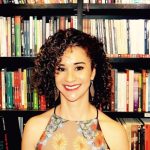
Joselina da Silva
Permanente
Lattes: http://lattes.cnpq.br/1785433331883652
She is an Associate Professor at the Federal Rural University of Rio de Janeiro (UFRRJ). She holds a postdoctoral degree from the Pontifical Catholic University of Peru (PUCP) and a Ph.D. (2005) in Social Sciences from the State University of Rio de Janeiro (UERJ). In 2004, she attended the intensive course Interrogating the African Diaspora at Florida International University. She contributed as a writer for entries related to race, racism, and the Black movement in the Contemporary Encyclopedia of Latin America and the Caribbean (2006). She was a member of the advisory board and the writing team for the Encyclopedia of Black Women in Brazil (2007). From 2006 to 2008, she served as the second vice-secretary of the Brazilian Association of Black Researchers (ABPN). She coordinates N’BLAC (Brazilian, Latin American, and Caribbean Center for Studies on Racial Relations, Gender, and Social Movements), which is certified by CNPq. She was a Research Productivity Fellow (BPI) funded by FUNCAP. In 2014, she served as the General Coordinator of the National Center for Information and Reference on Black Culture (CNIRC) at the Palmares Cultural Foundation.
She currently supervises master’s and doctoral students in the Graduate Program in Education at the Federal University of Ceará (UFC) and in the Graduate Program in Education, Contemporary Contexts, and Popular Demands (PPGEDUC) at UFRRJ. Her primary research interests include racial relations, Black women, violence against women, the Black social movement, and anti-racism.
RESEARCH LINE
- Line 3: Ethnic-Racial and Gender Education: Languages and Afro-Diasporic Studies.
RESEARCH PROJECTS
- Intersectionality between Gender, Race, and Education: Black Women with Doctorates in Education Departments at Federal Universities in the States of Ceará and Rio de Janeiro.
Coordinator: Joselina da Silva
Description: Studies on gender and science in academia are recurrent. These studies highlight the existence of symbolic barriers that hinder the educational and professional advancement of women who choose to enter male-dominated fields. Although this perspective is widely discussed, research focusing specifically on the situation of Black women in university spaces remains scarce. To contribute to discussions on the intersectionality of gender, race, and education, this project aims to analyze the educational trajectories of Black women with doctoral degrees who serve as professors in the Education Departments of public federal universities in Ceará and Rio de Janeiro. The objective is to identify the strategies they have developed throughout their careers as Black women, Ph.D. holders, and university professors in different contexts.
The study employs a qualitative methodology, conducting semi-structured interviews with professors who self-identify as Black. Additionally, an analysis of the Lattes Curriculum of each interviewee will be carried out to map their academic trajectories. Secondary data from CNPq will also be collected to assess the representation of Black women in scientific fields. The theoretical discussion is grounded in studies on gender, science, and institutional racism.
 http://lattes.cnpq.br/1785433331883652
 amandamoreira.uerj@gmail.com