 ACESSIBILIDADE
 LIBRAS






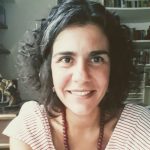
Flávia Miller Naethe Motta
Colaborador
Collaborator
Lattes: http://lattes.cnpq.br/5208144781873134
Researcher at the Graduate Program in Education, Contemporary Contexts, and Popular Demands at the Universidade Federal Rural do Rio de Janeiro. She completed her Postdoctoral research in Education at the Universidade Federal Fluminense. Associate Professor in the Department of Education and Society. She holds a PhD in Education from the Pontifical Catholic University of Rio de Janeiro (PUC-RIO). She teaches the course Psychology and Education. She is a School Psychologist and Coordinator of GEPELID – the Study and Research Group on Language, Childhood, and Difference, which develops the following research projects: “What do children say about living in exile: a study with refugee children on the experience of diaspora” and “The year the world stopped: conversations between children and adults about online education.”
CONTACT INFORMATION
E-mail: flaviamnmotta@ufrrj.br
RESEARCH LINE
- Line 1: Contemporary Studies and Educational Practices.
RESEARCH GROUP
- Language, Childhood, and Difference Study and Research Group – GEPELID
Coordination: Flávia Miller Naethe Motta and Carlos Roberto de Carvalho.
GEPELID was founded in the Baixada Fluminense at the Nova Iguaçu campus of the Universidade Federal Rural do Rio de Janeiro. It emerged from GRUPIs – Research Group on Childhood up to 10 years old, following the choice of some researchers for a Bakhtinian theoretical-methodological framework. Initially focused on childhood, the group expanded its work to include research related to teacher education. Currently, GEPELID is composed of PhD holders, PhD candidates, Master’s holders, Master’s candidates, undergraduate students, and Scientific Initiation students.
Research Group Website: https://gepelid-ufrrj.blogspot.com/
Facebook: https://www.facebook.com/gepelid.ufrrj
Instagram: https://www.instagram.com/gepelid/
YouTube: https://www.youtube.com/channel/UCgdJDCL-SatXqV6kIPNT0Hw
RESEARCH PROJECTS
- The Year the World Stopped: Conversations with Children and Adults about Online Education
Period: (2021 – Present)
This research project is situated within the field of childhood studies and teacher education, in conjunction with issues related to online education. The axis that brings them together originates from the Covid-19 pandemic and the demands it placed on teachers, with consequences for the lives of children who, in response to the challenge, began to form their own understandings. The project addresses three spheres, all profoundly impacted by contemporary events. We aim to contribute to the analysis of Brazil’s experience with online education as a result of the Covid-19 pandemic from the perspective of the involved subjects: children, teachers, and families. What are the narratives of these subjects regarding the pedagogical practices adopted as an alternative to the social isolation imposed to protect their lives? For the specificity of knowledge production in the field of human sciences, we highlight one aspect that will receive special attention in this research: the approach to the research subjects – children and adults – as a dialogic act. Even in virtual settings, dialogue is possible, and the utterance will emerge from the worldviews, interactions, and experiences of those involved, with non-verbal aspects (such as response time, silence, use of emojis, etc.) expressing meaning as much as verbal content. We will engage in conversations with both children and adults, with authors supporting our theoretical reflections, and with the presumed “other” who appears in the grand time or the grand dialogue. In the virtual environment, we will use field notes, photographs/screen captures, video recordings, and audio recordings, while also considering research methodologies involving children, with attention to ethical issues.
- The Experience of Diaspora: Refugee or Asylum-Seeking Children in the Baixada Fluminense/RJ
Period: (2019 – Present)
This research investigates, from the children’s perspective, the experience of leaving their homeland (Venezuela) due to economic or political reasons and living as refugees/asylum seekers in Brazil. The goal is to understand the children’s narratives regarding their departure from their countries of origin, to identify how they describe their life in Brazil, and to analyze, through peer culture, how children (re)construct their identities (or incorporate new cultural and linguistic elements into their subjectivities) in a foreign country. The theoretical framework is grounded in childhood studies and seeks an epistemology that breaks from the adult-centric logic still prevalent when dealing with young subjects. Methodologically, the project adopts Bakhtinian theoretical-methodological frameworks, considering that the specificity of human sciences lies in the relationship between the researcher and expressive, speaking subjects.
Funding: PNPD Capes Fellowship (2019), CNPq Scientific Initiation Fellowships (2020, 2021)
- In Search of a Heteroscience: Ethics, Aesthetics, and Epistemology in a Bakhtinian Perspective of the Human Sciences
Period: (2017 – 2021)
This project explores the implications of adopting the philosophy of language of Mikhail Bakhtin for the specifics of knowledge production in the human sciences. Initially, two aspects deserve special attention: the researcher’s approach to the research subjects as a dialogic act and the presentation of the understandings obtained from research in the genre of academic writing, which is “expanded” to accommodate aspects related to authorship. The methodology in human sciences has long been questioned in search of a closer relationship between research and its objects. Charlot (2006) points out two fundamental distinctions between the so-called hard sciences and the human and social sciences: their starting points and their memory. While the hard sciences begin with their end points and are cumulative, the human and social sciences progress from their starting points. “When progress occurs in these sciences, it is because another way of beginning has been proposed (and because it proves to produce results)…” (p. 17). For Bakhtin (2011), the specificity of the human sciences must consider that they involve the relationship between the researcher and expressive, speaking subjects. In this case, the one seeking knowledge does not ask themselves or a third party, in the presence of a mute object, but directly asks the subject they wish to know (p. 394). Ethics and aesthetics intersect in the human sciences to give rise to epistemology – art, life, and knowledge. The triple dimension of culture permeates all human existence and marks actions as irreproducible and fully responsible for the subject. Amorim (2007) affirms the conflictual and problematic nature of our research field, which involves understanding that transparency does not exist in one’s own discourse, nor in the discourse of others. This project thus aims to theoretically address the consequences of adopting an alternative model of human sciences and engage in dialogue with the research work of our PhD, Master’s, and undergraduate students, through an in-depth study of Mikhail Bakhtin and authors who have used him as a reference for their own work, as well as the reading of literary works to understand the theoretical and conceptual framework of Bakhtinian reflection in the human sciences.
 flaviamnmotta@ufrrj.br
 http://lattes.cnpq.br/5208144781873134