 ACESSIBILIDADE
 LIBRAS






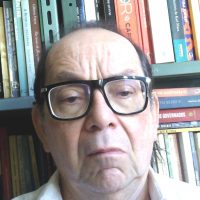
Máximo Augusto Campos Masson
Colaborador
Collaborator
Lattes: http://lattes.cnpq.br/1132398987153174
Associate Professor at the Federal University of Rio de Janeiro and the Graduate Program in Education, Contemporary Contexts, and Popular Demands at the Federal University of Rio de Janeiro. Sociologist, holding a degree from the Federal University of Rio de Janeiro, a Master’s degree in Social Sciences (with a concentration in Politics) from the same institution, and a Ph.D. in Education, also from the Federal University of Rio de Janeiro. He completed a Postdoctoral Fellowship at the School of Education at the University of São Paulo. Previously, he was a faculty member at the Federal University of Ouro Preto (1987–1988), the Federal Rural University of Rio de Janeiro (1989–1993), and the Federal University of the State of Rio de Janeiro (1993–1997). He has held various administrative and academic representative roles. As an invited researcher, he collaborated with the Brazilian Center for Latin American Studies.
He has extensive experience in the field of Sociology, with a focus on the Sociology of Education, conducting research on topics such as teaching work, teachers’ union movements, educational policies, social movements and education, labor and education, educational trajectories, and social classes. He is a member of the research team at the Study and Research Group on Work, Training, and Teacher Identity at the Federal Rural University of Rio de Janeiro, the Center for Studies and Research in Education Management and Public Policies at the Fluminense Federal University, and the Teaching and Research Group on Geography Didactics, coordinated by Professor Dr. Sônia Castellar at the University of São Paulo, as well as the Social Imaginary and Education Laboratory at UFRJ. He is also a member of the National Association of Educational Policy and Administration, the Latin American Sociology Association, the National Association for the Training of Education Professionals, and the Brazilian Curriculum Association.
RESEARCH LINE
- Line 2: Social Inequalities and Educational Policies
RESEARCH GROUP
- Habitus and Practices – Study and Research Group on Work, Training, and Identity
Coordinator: Máximo Augusto Campos Masson
Research Group Website: https://www.habitusepraticas.com/
RESEARCH PROJECTS
- The Educational and Political Fields in the Face of Contemporary Conservatism
Coordinator: Máximo Augusto Campos Masson
Description: Based on Pierre Bourdieu’s sociological propositions regarding social practices—particularly his central concepts of social field, class habitus, and forms of capital—as well as on the Marxist tradition, especially Gramscian formulations of hegemony as a form of political domination, this research aims to analyze the effects of political changes on the practices of social agents within the educational field. Specifically, it examines how teachers interact with students, institutions, and perceptions of teaching in response to the emergence and expansion of new forms of conservative activism in Brazilian society, particularly movements of religious or partisan political origin.
The study’s specific objectives include: Identifying and describing direct conservative interventions in educational institutions linked to social movements and political parties;Understanding the responses of educational field agents, including teachers’ unions, to the new conservative activism;Examining trends of adherence to conservative actions among education field agents, such as teachers and students;Investigating potential effects on the educational field stemming from counter-conservative reactions from social movements and political parties identified as “democratic” or “progressive.”
The research focuses on the state of Rio de Janeiro due to its historical political relevance in Brazil and its demonstrated strong support for conservative political projects, as evidenced by electoral results over the past decade. The study’s primary hypothesis is that, despite the subordinate status of the educational field in Brazilian society, it plays a significant—though not immediate—role in shaping power relations within the political sphere and broader social domination processes.
 http://lattes.cnpq.br/1132398987153174

 cleziogeo@yahoo.com.br